
CDL Pre-Trip Inspection: The Complete Checklist and Guide
By Rish P · September 28, 2026 · Updated November 3, 2026
The CDL pre-trip inspection is a systematic check of your vehicle before driving, required by law and graded as one of the three parts of the CDL skills test. Its purpose is simple: confirm the vehicle is safe before it moves. Learning to do it thoroughly and consistently is essential for passing your test and for daily driving. If you need ELDT, RoadCert offers FMCSA-registered online ELDT theory for Class A, Class B, Hazmat and Passenger, and we report your completion to the FMCSA for you (FMCSA ELDT).
Why the pre-trip matters
A commercial vehicle that breaks down or has a defect can cause a serious crash. The pre-trip inspection catches problems, worn brakes, low tires, leaks, loose connections, before you are on the road. On the skills test, you must show an examiner you can identify and check the required components and explain what you are looking for.
Engine compartment
- Oil, coolant, and power steering fluid levels
- Belts and hoses for wear, cracks, or leaks
- The alternator, water pump, and air compressor connections
- Wiring and no leaks under the engine
In the cab
- Fasten your seatbelt and check that gauges work
- Test the parking brake and service brake
- Check the steering play, horn, wipers, and mirrors
- Confirm required emergency equipment (fire extinguisher, warning triangles, spare fuses)
Lights and signals
- Headlights (high and low beam), turn signals, brake lights, and four-way flashers
- Clearance and marker lights
- Reflectors clean and in place
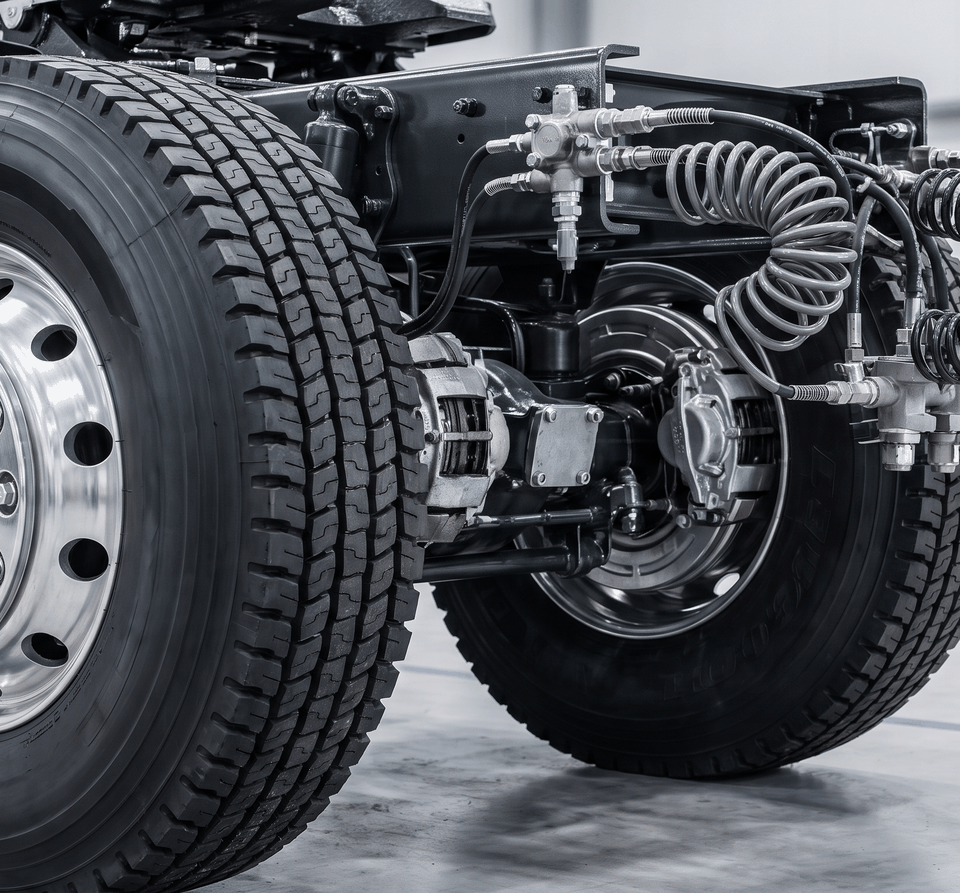
Tires, wheels, and brakes
- Tire tread depth (generally at least 4/32 inch on steering tires, 2/32 elsewhere) and proper inflation
- No cuts, bulges, or exposed cords
- Wheels and rims for cracks and missing or loose lug nuts
- Brake components, slack adjusters, and (for air brakes) a full air-brake check
Coupling (for combination vehicles)
- Fifth wheel locked around the kingpin, no gap
- Air and electrical lines connected and secure
- Landing gear fully raised
The air-brake check
For air-brake vehicles, perform the air-brake test: check that the low-air warning works, the system holds pressure, and the brakes apply properly. This is a graded, must-do sequence on the skills test.
How to pass the inspection portion
Learn the inspection in the same order every time so you do not miss anything, practice saying out loud what you are checking and why, and use your state's CDL manual checklist. Consistency is what earns a pass.
The bottom line
The pre-trip inspection is a required, graded skill: engine, cab, lights, tires and brakes, coupling, and the air-brake check (Rhode Island DMV skills test). Learn it in a fixed order, practice it until it is automatic, and you will pass this portion of the skills test and drive safer every day.
Sources
Checked November 2, 2026.
- FMCSA: Model Commercial Driver License Manual (2014): The CDL skills test has three parts, including the vehicle inspection, where you inspect your vehicle, plus tire and air-brake checks.
- Rhode Island DMV: Commercial Skills Test: You must pass all three parts of the skills test: vehicle inspection, basic control skills and road test.
- FMCSA: Entry-Level Driver Training (ELDT): ELDT requirements for CDL applicants and how training completion is reported to the FMCSA.
Frequently asked questions
What is a CDL pre-trip inspection?
A CDL pre-trip inspection is a systematic check of your commercial vehicle before you drive it, to confirm it is safe to move. It covers the engine compartment, cab, lights, tires, wheels and brakes, coupling on combination vehicles, and the air-brake system. It is also graded as one part of the CDL skills test.
Is the pre-trip inspection part of the CDL skills test?
Yes, the vehicle inspection is one of the three parts of the CDL skills test, along with basic vehicle control skills and the on-road driving test. You must show the examiner you can identify the required parts and explain what you are checking and why. Practice it in the same order every time.
What happens if I fail the pre-trip inspection on my CDL test?
If you fail the vehicle inspection, you have not passed the skills test, because you must pass all three parts to earn your CDL. Your state may stop the test at that point and require you to retest the inspection. Retest waiting periods and fees vary, so check with your state DMV.
What do I have to check on a CDL pre-trip inspection?
You check the engine compartment, the cab, lights and signals, tires, wheels and brakes, coupling on combination vehicles, and the air-brake system if your vehicle has one. That includes fluid levels, belts, hoses, gauges, emergency equipment, tire condition, lug nuts and the fifth wheel. Use the same order every time so you do not miss anything.
Do I have to do an air-brake check on the CDL pre-trip?
Yes, if your vehicle has air brakes, you perform the air-brake check as part of the pre-trip, and it is a graded, must-do sequence on the skills test. You check that the low-air warning works, that the system holds pressure, and that the brakes apply properly. Practice it until it is automatic.
What is the minimum tire tread depth for a CDL pre-trip inspection?
Tires should generally have at least 4/32 inch of tread on steering tires and 2/32 inch on all other tires, with proper inflation. Also look for cuts, bulges and exposed cords, and check wheels and rims for cracks and missing or loose lug nuts. Do not drive on a tire that fails these checks.
Ready to knock out your ELDT theory?
Online theory listed on the FMCSA Training Provider Registry for $18.99, reported the same day.
Training a group? See bulk seats and branded portals for schools and fleets
Related guides
- CDL Tanker Practice Test 2026: Sample Questions and Answers
The tanker (N) endorsement test covers liquid surge, rollover risk, and tank inspection. Here is what to expect plus sample questions with answers.
- The CDL Skills Test Explained: Inspection, Control, and Road
The CDL skills test has three parts: a vehicle inspection, basic control skills, and a road test. Here is exactly what each involves and how to pass.
- Hazmat Endorsement Study Guide: What to Know for the Test
Preparing for the hazmat endorsement means learning hazard classes, placards, shipping papers, and safe handling. Here is a focused study guide for the test.